
The Kraken COVID-19 variant accounts for almost 41 per cent of all Covid infections.

'Enterprises have become more demanding in terms of their productivity expectation from their employees.'

Clock 11% growth in the first 11 months of 2022.
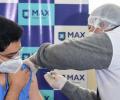
'The protective effect of the vaccine lasts for about nine months to a year.' 'For health workers that period is already over. This is the right time to augment their immunity.'

Indian drug firms continue to work closely with the FDA, and most have also appointed consultants to help them grasp the regulatory minutiae in the US.

Less than 30,000 booster doses daily in December.

The joint inspections is to ensure the safety, efficacy, and quality of drugs available in the country

The vaccine would not have production scalability issues unlike Covaxin, Bharat Biotech's COVID-19 virus vaccine.
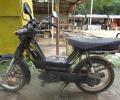
Kinetic Engineering (KEL), the makers of the iconic Luna two-wheelers in the seventies, will soon start producing components for an electric version of the moped. Pune-based Kinetic said in September that Luna would make a comeback in an electric avatar. The electric Luna, or E-Luna, will be launched by KEL's sister company Kinetic Green Energy and Power Solutions.

'If there are any symptoms/variants of concern, states can prepare accordingly.'
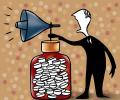
The pharmaceutical and the consumer durables sectors, which depend on China for imports, have not been impacted yet due to unrest in China with people protesting against lockdowns. But the lockdown could have an impact on the supply of components used in consumer durables if it continues for the next fortnight. In the pharmaceutical industry, Indian players import 66-70 per cent of their bulk drug requirements from China.

Sundararaman Ramamurthy has been an interesting choice for the publicly-listed BSE, which has seen its chief move to bigger rival -- the National Stock Exchange (NSE) -- in July. Having spent nearly two decades at the country's largest bourse, Ramamurthy is among the early architects of NSE and understands all the cogs of the exchange wheel like only a few others in the country. Just like NSE's core team, which includes its founder RH Patil, the 59-year-old Ramamurthy has worked at the Industrial Development Bank of India (IDBI) before moving to NSE in 1995.

'Yet the market didn't do all that badly because it was cushioned by domestic inflows.'

An immune-escape Covid-19 strain coupled with the natural spike in influenza and pneumonia cases during winters may lead to a rise in hospitalisation.

Codeine-based formulations are under the scanner for misuse as a narcotic product.
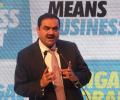
Two firms belonging to the Adani group - India's most valued conglomerate - are part of the Nifty 50 index. The group, however, has no representation in the Sensex. And it could stay this way if a proposed index qualification rule change gets approved. Recently, Asia Index, a joint venture between S&P Dow Jones Indices and BSE responsible for index composition, floated a consultation paper where it proposed that a stock must have a derivative contract to be eligible for inclusion in the flagship 30-share Sensex index.
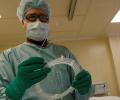
The Centre has asked traders and resellers of medical devices to register in an attempt to expand the ambit of regulating the medical devices industry in the country. The move can have far-reaching consequences for both consumers and traders alike as products like face masks or prophylactics - now sold through grocers and other channels - may face issues of availability. In a notification dated September 30, the union ministry of health and family welfare said anyone wanting to sell, stock, exhibit or offer for sale or distribute a medical device, including in-vitro diagnostic medical device, will need a certificate of registration.

'This year there is a sharp spike in fever cases, and it seems to be more than the pre-COVID-19 levels.'
The transition of Class A and Class B medical device makers to the licensing regime by October 1 seems to be an uphill task with several small and medium manufacturers saying they are still awaiting the audit from the government authorities. If the licenses don't come through, either due to lack of audits or MSME units not clearing the audits, then a few thousand small-scale medical device units will face the issue of business continuity in three weeks. Class A medical devices are those with low to moderate risk to the patient or user (surgical dressings for example), while Class B medical devices refer to devices with moderate risks that require special controls (catheters for example).

This would be India's largest crowd-funded programme to help patients with a particular disease.
 © 2026 Rediff.com - Investor Information - Advertise with us - Disclaimer - Privacy Policy - Sitemap - Feedback - About us - Terms of use - Grievances